Tag: mindset

  • You Don’t Need to Have All the Answers Yet

    There are moments in life when the weight of uncertainty feels heavy. We want to know right now whether we should stay or leave, take a new opportunity, change careers, or move somewhere entirely different. We crave instant certainty, desperate for a guarantee that we are making the right choice. But life rarely hands out answers on our rigid schedules, and learning to sit with that truth is often the hardest part.

    A peaceful morning landscape symbolizing patience, trust, and embracing uncertainty in personal growth

    Not Knowing Is Not a Failure

    We tend to treat uncertainty like a personal flaw. If we don’t have a definitive five-year plan or clear direction, we assume something is fundamentally wrong with us—and that everyone else has it all figured out.

    The reality is quite different. You can be deeply thoughtful, ambitious, and capable while still having no idea what comes next. You do not need to possess all the answers to move forward with your life.

    Some Answers Simply Take Time

    There are questions in life that cannot be solved by sheer overthinking. You cannot rush clarity with a spreadsheet or endless mental loops; instead, you need experience, distance, and sometimes the grace to make a few mistakes.

    Clarity arrives quietly, often catching you unawares. One day, a situation that once felt terribly confusing suddenly makes complete sense—not because you found a magic formula, but because you finally gathered enough life experience to see it differently.

    You Can Take the Next Step Without Seeing the Whole Path

    Imagine standing at the edge of a winding road at dusk. You cannot see every turn, predict the weather, or know who you will meet around the bend. Yet, you can still take a step forward.

    Life operates on the exact same principle. You don’t need the entire roadmap mapped out in meticulous detail; you only need enough light and clarity for the very next step. Take it, pause, and look again. The path reveals itself only as you walk it.

    Stop Demanding That Today Guarantee Tomorrow

    We often paralyze today’s choices by demanding that they guarantee a flawless tomorrow. We want absolute immunity from regret and failure. But no decision comes with that kind of insurance.

    You can only make the most informed, honest choice possible with the information you have right now. Remember, a decision doesn’t have to be permanent to be deeply meaningful. You are always allowed to learn, adjust, and change direction.

    Don’t Let Other People’s Loud Certainty Rush You

    It is easy to feel inadequate when someone around us seems utterly sure of their trajectory—their career, their timeline, their next big move. But that is their unique journey, not yours.

    Your life may require different questions, deeper patience, and a totally different rhythm. There is no prize for figuring everything out first. Give yourself permission to unfold at your own pace, trusting that not knowing what comes next doesn’t mean you’re lost—it simply means you are still becoming.
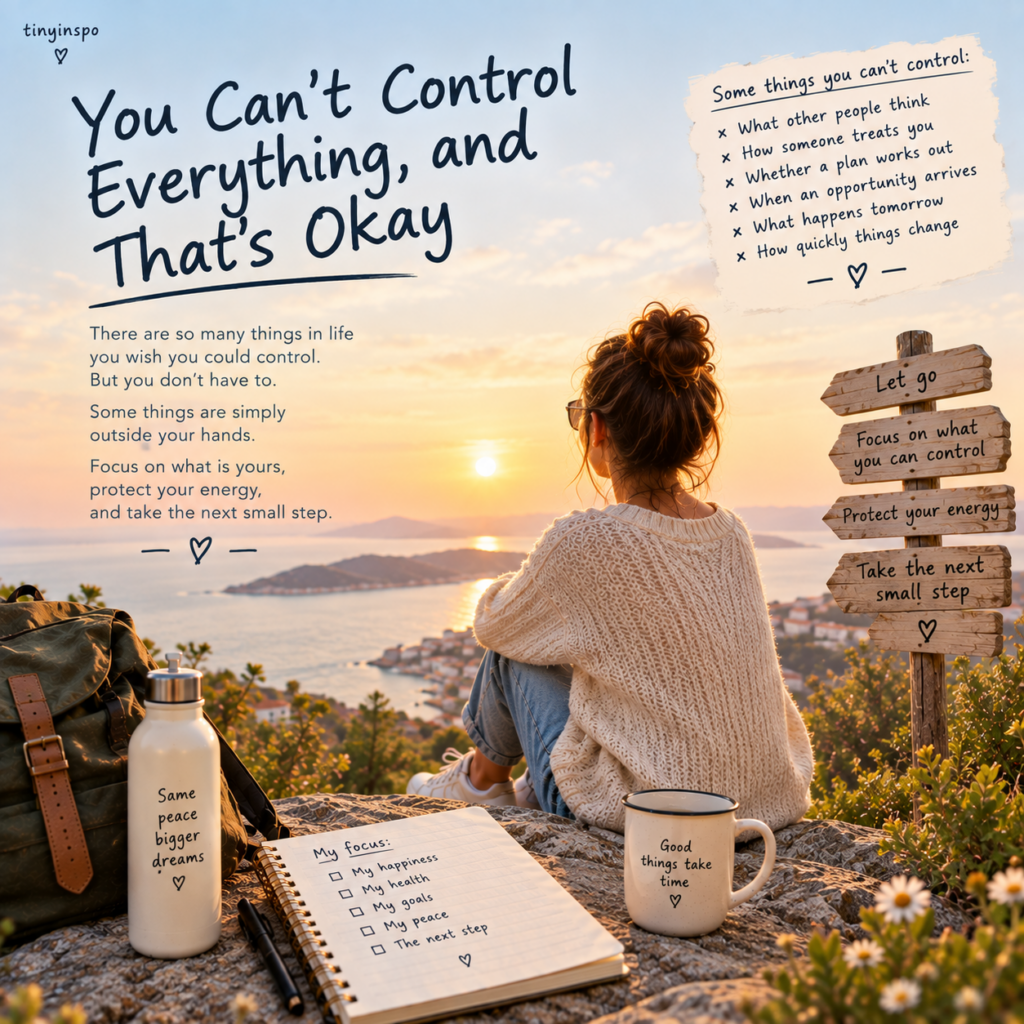
  • You Can’t Control Everything, and That’s Okay

    There are so many things in life we secretly wish we could manage down to the last detail: what other people think of us, how someone treats us, whether a carefully laid plan actually works out, or how quickly things change. When we try to control it all, we inevitably end up exhausted. The truth is, life was never meant to be a completely predictable script.

    A serene morning landscape symbolizing letting go of control and focusing on inner peace

    Some Things Are Simply Outside Your Hands

    You can prepare meticulously and still run into unexpected problems. You can treat someone with absolute kindness and still be misunderstood. You can work hard toward a goal and still face disappointment.

    That doesn’t automatically mean you did something wrong; it simply means life doesn’t always follow a straight line. Learning to accept that gap between our plans and reality is where a lot of our inner peace begins.

    Focus on What Is Yours

    While you cannot control the world around you, you do hold the reins to your immediate choices. You can control whether you keep trying, where you direct your attention, how you set your boundaries, and how gently you speak to yourself.

    Instead of burning yourself out asking, “How can I fix or control this situation?” try pausing to ask, “What is actually within my control right now?” That simple shift brings you back to solid ground.

    Stop Predicting Every Future Outcome

    A huge portion of our daily anxiety comes from trying to live tomorrow before it even arrives. We mentally rehearse conversations that haven’t happened, worry over decisions not yet made, and carry the heavy weight of futures that may never even exist.

    Come back to today. This moment is real, and the next small step is real. You don’t need to solve every possible problem tonight.

    Let People Be Who They Are

    One of the hardest lessons to accept is that you cannot force someone to understand your perspective, make them appreciate you, or control whether they stay. You can communicate honestly and set clear boundaries, but after that, their choices belong entirely to them. Their behavior is theirs; your compassionate response is yours.

    Acceptance Isn’t Giving Up

    Accepting a difficult situation doesn’t mean you approve of it, condone it, or stop caring. It simply means you finally stop fighting reality with exhausted fists. You can acknowledge that something hurts without spending all your limited energy wishing it had happened differently. Acceptance creates breathing room, and from that space, you can choose your next move wisely.

    Protect Your Energy

    Not every problem deserves your attention, and not every opinion requires a response. Your energy is a finite, precious resource. Spend it on what truly matters: your health, your peace, your creativity, and your own life. Sometimes, protecting your well-being simply requires whispering to yourself: “I can’t control this, so I am going to put it down.”

    Let yourself take things one small step at a time, trusting that you don’t need to hold the entire universe together to be okay.

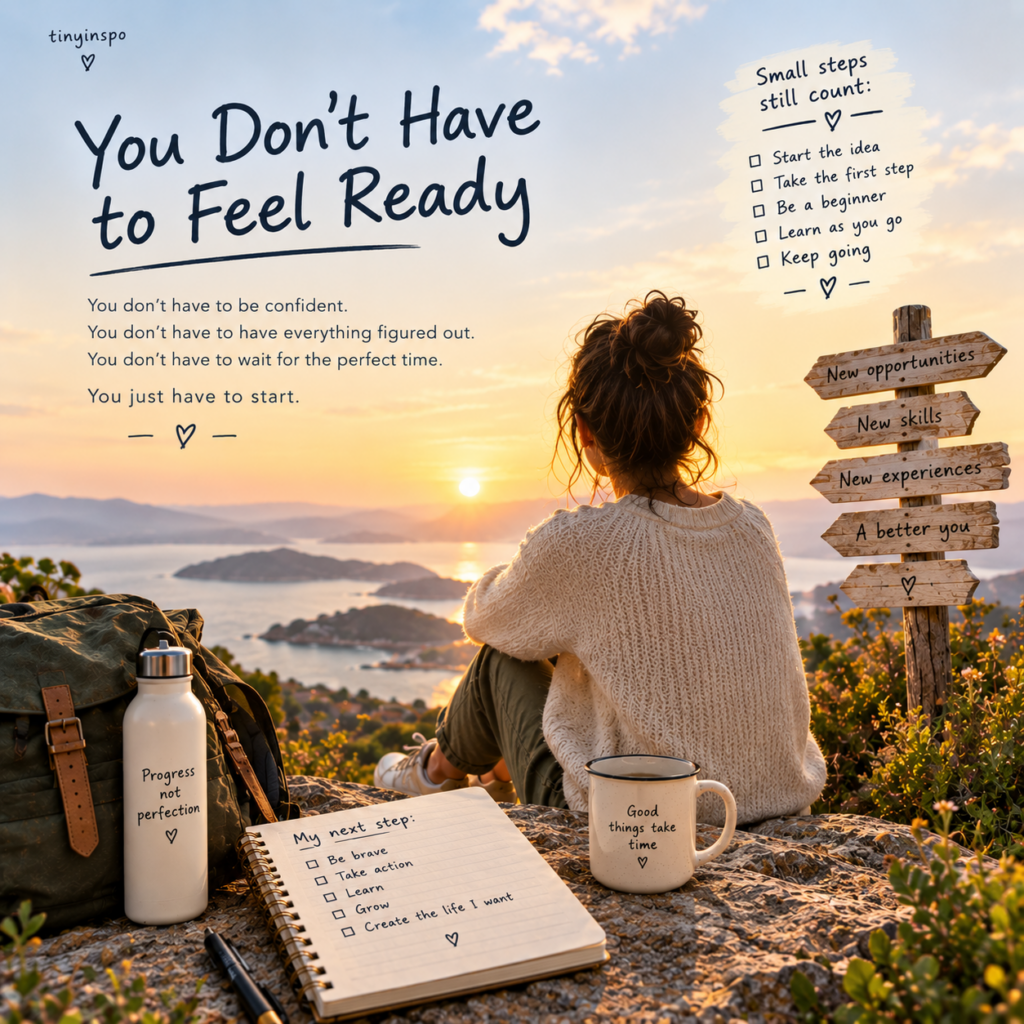
  • You Can Don’t Have to Feel Ready

    How many times have you caught yourself saying, “I’ll start as soon as I’m finally ready”? We tell ourselves we need to feel more confident, know enough, have endless free time, or feel completely fearless before we take a single step. It always sounds like a very reasonable approach. But most of the time, waiting to feel ready is simply a clever disguise for staying stuck in our comfort zones.

    A peaceful morning view symbolizing the journey of starting without feeling ready

    Ready Is Not a Prerequisite

    We tend to assume that confidence comes first. We think we need to feel secure and sure of ourselves, and only then take action. In reality, life rarely operates that way.

    More often than not, you take the first step while you are still deeply uncertain. You try, you stumble, you make mistakes, and you learn along the way. Only then does true confidence begin to form. You don’t become ready and then begin; you begin, and becoming ready happens organically as you move forward.

    Fear Is Just a Sign That It Matters

    Feeling nervous or scared doesn’t automatically mean you are making the wrong choice. Sometimes, it simply means that whatever you are about to do actually matters to you.

    Starting a new project, changing your daily routine, or stepping into the unknown will always feel uncomfortable. You don’t need to completely eliminate fear before moving forward. Real courage isn’t the total absence of uncertainty—it is choosing to take the step anyway, even while your hands are shaking a little bit.

    Your First Attempt Is Allowed to Be Messy

    We often delay starting because we want everything to be flawless right out of the gate. We want the perfect plan, perfect timing, and a polished version of ourselves. But your first attempt doesn’t need to impress anyone; it only needs to exist.

    Write that rough first paragraph, record the imperfect video, or take that small initial walk. Your first draft or version is always allowed to be unfinished. After all, you can easily improve something that actually exists in front of you, but you can never improve something you never begin.

    Action Teaches You What Planning Cannot

    Thinking and preparing can only take you so far. You can research for weeks, map out endless scenarios, and try to anticipate every obstacle. Eventually, however, you have to experience the thing itself.

    Action gives you raw data that planning never can. You discover what genuinely works, what needs to change, and what you actually enjoy. Sometimes, the path forward only becomes visible after you take the very first step.

    Stop Waiting for Permission

    You don’t need everyone around you to completely understand your vision or agree with your choices. You don’t need a stamp of approval to prove you are capable. If a path or an idea matters to you, you have full permission to explore it, to stumble as a beginner, and even to change your mind later on.

    When things feel overwhelming, scale the goal down. Don’t ask yourself how you are going to completely overhaul your life overnight. Just ask what tiny, manageable action you can take in the next ten minutes.

    You don’t need the entire roadmap mapped out to make progress. You just need the next step. Let yourself be imperfect, let yourself learn, and remember: the feeling of readiness you’ve been waiting for doesn’t arrive before you start—it shows up because you finally decided to begin.

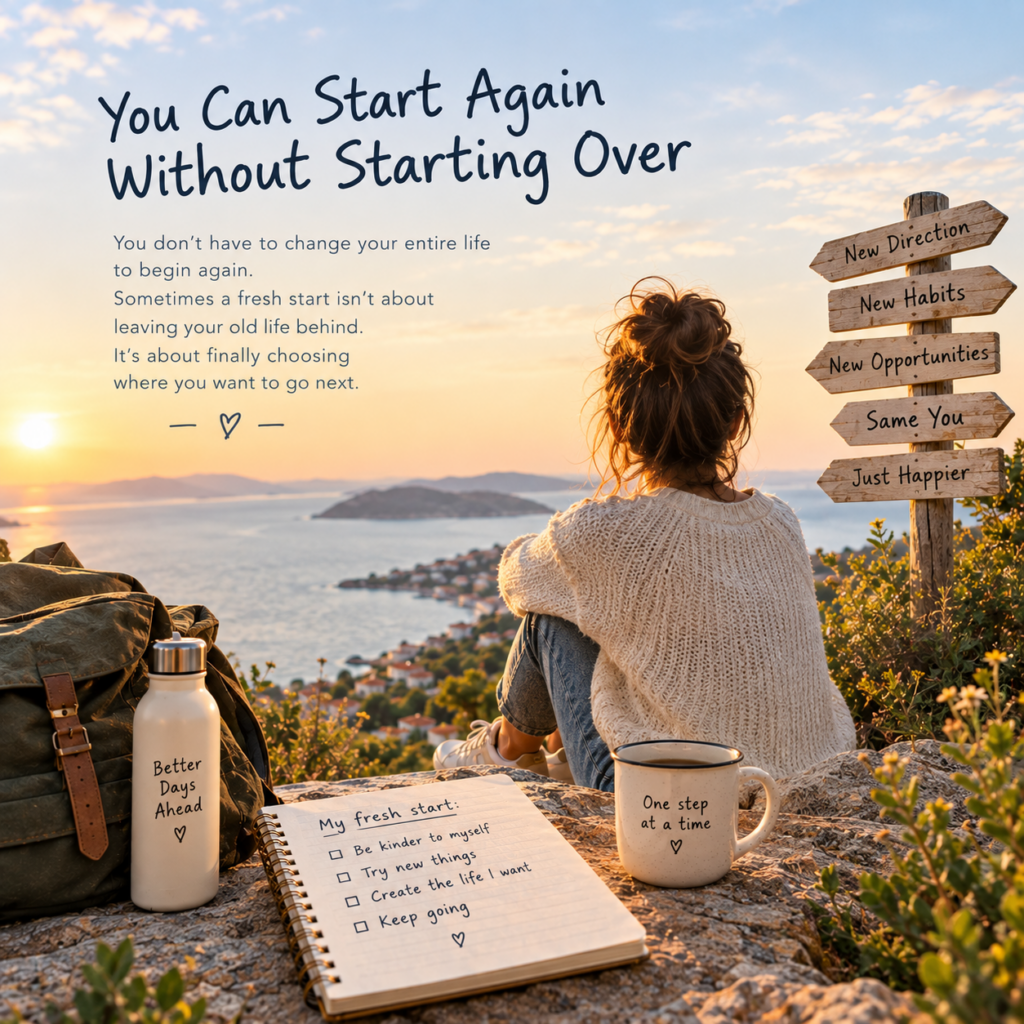
  • You Can Start Again Without Starting Over

    Sometimes, life pushes you to a point where you feel like the only way forward is to burn everything down and completely start over from scratch. You catch yourself dreaming of a new job, a brand-new city, a totally different daily routine, or even an entirely new version of your own personality. You look at the mirror and think, “Maybe I just need to change everything about my life.”

    You Can Start Again Without Starting Over concept illustration
    You Can Start Again Without Starting Over concept illustration

    It’s a heavy, overwhelming feeling. But the truth is, most of the time you don’t need a completely new life. You just need a slight change in direction.

    You Are Not Starting From Zero

    When a project, a relationship, or a phase of life doesn’t work out the way you hoped, it’s easy to look back and feel like all that time was simply wasted. But it never is. Every single experience taught you something valuable. Every mistake handed you a piece of data, and every difficult, draining season revealed a layer of inner strength you didn’t know you had.

    Even the paths you wish you had never walked are part of the map that brought you right here. Starting over doesn’t mean erasing your past or pretending it never happened. It simply means taking everything you’ve learned along the way and carrying it forward. You are not starting from zero; you are starting from experience.

    You Are Allowed to Change Your Mind

    We often trap ourselves because we feel chained to decisions we made years ago. You don’t have to stay permanently committed to a version of yourself, a career path, or a lifestyle that no longer fits who you are today. Maybe you chased a certain dream because it felt right at twenty-one, but now at thirty, it feels completely hollow.

    Changing your mind isn’t a badge of failure. More often than not, it is the loudest proof of your personal growth. You are fully allowed to discover that you want something entirely different out of your brief time here.

    Clarity Arrives After You Move

    One of the main reasons starting over feels so terrifying is our desperate need for a master plan. We want the entire roadmap laid out before us—we want to know where we’ll be in five years, what the risks are, and if we’ll succeed.

    The catch, however, is that clarity almost never comes from sitting still and overthinking. It comes from movement. You don’t need to map out your entire next decade today; you only need to figure out what feels like the right next step. Send that email, update your resume, buy the notebook, or take a walk to clear your head. Small, physical actions create a momentum of clarity that thinking alone can never reach.

    Real Change Can Be Quiet

    Starting over doesn’t require a cinematic, dramatic transformation. You don’t need a new personality, and you certainly don’t need to suddenly become a fearless, hyper-productive machine overnight.

    Real, lasting change is often remarkably quiet. It looks like becoming a bit more honest about what drains your energy. It looks like protecting your free time, learning how to say no without making excuses, and giving yourself permission to be a complete beginner at something new.

    Choosing Where You Go Next

    Maybe you made a choice you regret. Maybe you stayed in an unfulfilling situation way longer than you should have, or maybe you lost your compass for a while. None of that stops you from beginning again right now. You don’t need anyone’s permission, and you don’t owe an explanation to your past self or anyone else.

    You can simply look at your messy, beautiful life today and decide that this isn’t where your story ends. You don’t have to throw everything away to find a fresh start. Sometimes, starting over isn’t about leaving your old life behind at all—it’s about finally choosing where you want to go next.

  • The Unfinished Thing

    There’s a particular kind of paralysis that comes from wanting to do something well. Not the fear of failing outright — that one’s almost easier to name. This is quieter. It’s the sense that if you can’t do a thing properly, you’d rather not do it at all.

    I think most people carry an unfinished thing somewhere. A draft. A language half-learned. A relationship left slightly too long in silence. Not abandoned, exactly — just permanently pending, waiting for a version of you with more time, more clarity, more right to attempt it.

    The Myth of the Right Conditions

    We tend to imagine competence as a prerequisite rather than a result. As if skill arrives before the doing, instead of being built by it.

    But almost nothing works that way. The early draft is supposed to be bad. The first conversation in a new language is supposed to be clumsy. The awkward, honest text after a long silence is supposed to feel exposed. These aren’t signs you’re doing it wrong — they’re just what the early part of anything looks like.

    Waiting to feel ready is often just a more comfortable way of not starting.

    What Gets Lost in the Waiting

    • A skill not practiced doesn’t stay neutral — it quietly recedes.
    • A relationship not tended doesn’t stay paused — it cools.
    • An idea not written down doesn’t stay safe — it fades until it’s unrecognizable, or gone.

    Perfectionism markets itself as care. Often it’s just fear, dressed more respectably.

    A Smaller Standard

    Somewhere along the way, it helps to trade the question “can I do this well?” for a smaller one: “can I do this today, badly, and let that be enough for now?”

    That shift sounds like giving something up. It isn’t. It’s usually the only way anything gets finished at all — not because the bad version was the goal, but because the bad version was the only route to the better one.

    The Version That Exists

    A mediocre paragraph you actually wrote will always outlast a brilliant one you only imagined. An awkward conversation you actually had will do more for a relationship than the perfect one you kept rehearsing in your head.

    The unfinished thing doesn’t need you to arrive as someone more capable. It just needs you to show up as you are, today, and do the next small, imperfect part of it.

    That’s usually where it starts moving again.

  • 🌿 The Courage to Begin

    Every journey starts with a single step. Learn why taking action—even when afraid or unprepared—is the key to progress and personal growth.


    #courage #growth #mindset #motivation #dailyinspiration


    Starting Is the Hardest Part

    Often, the hardest step in any journey is the first one.
    We wait for the perfect moment, the right plan, or the ideal conditions—but the truth is: there is no perfect moment.

    Taking the first step requires courage—the courage to start before you feel ready.


    Why Beginning Matters

    • 💪 Breaks inertia: Action sparks momentum, no matter how small.
    • 🌱 Builds confidence: Each start proves you’re capable of moving forward.
    • Clarifies direction: Once you begin, you learn and adjust along the way.
    • ❤️ Creates opportunity: New experiences and growth emerge only through action.

    Waiting for certainty often keeps us stuck in place. Courage allows us to bridge the gap between intention and action.


    Examples of Courageous Beginnings

    • Sending that first email to pitch your idea.
    • Writing the first sentence of a book, even if it feels messy.
    • Starting a workout or diet plan without waiting for motivation.
    • Launching a project, knowing mistakes are possible.
    • Approaching someone to mend a relationship, even when nervous.

    Every brave first step opens doors and possibilities that weren’t there before.


    How to Cultivate the Courage to Begin

    Start small: Tiny, manageable actions reduce fear and overwhelm.
    Focus on the process, not perfection: Progress matters more than flawless execution.
    Reframe fear: See anxiety as a sign that you’re growing.
    Commit to action today: Don’t wait for inspiration—take a step now.
    Reflect and adjust: Learn as you go, rather than waiting to have all the answers.


    Momentum Follows Action

    Courage is contagious—starting creates momentum:

    1. Take the first step → 2. Build small wins → 3. Gain confidence → 4. Continue progressing

    Every journey, no matter how ambitious, begins with one brave action.


    Final Thought

    🌱 “The journey of a thousand miles begins with a single step.” — Lao Tzu

    Stop waiting. Stop overthinking.
    Take that first step, even if it feels uncomfortable, uncertain, or imperfect.

    Because the courage to begin is the doorway to growth, progress, and transformation.

  • 🌿 The Power of Small Beginnings

    Big changes start with small steps. To transform your habits and create a sustainable life, all you need to do is begin.


    #habits #personaldevelopment #sustainability #motivation #mindset


    Small Starts, Big Impact

    When you set a goal, the first thing that usually comes to mind is a big, bold vision:
    📝 Writing a book
    🏃‍♂️ Running a marathon
    💼 Starting your own business
    🧠 Living with more discipline

    But here’s the truth:
    No big goal happens without a small beginning.

    We often think starting is the hardest part.
    But really, the hardest part is putting off the start.


    You Don’t Need to Be “Ready”

    Most people delay taking action because they don’t feel ready.
    But the truth is: Readiness often comes after you begin.

    Instead of waiting, ask yourself:

    What’s the smallest step I can take toward this today?

    Sometimes, you just need to crack the door open.
    The rest unfolds from there.


    Why Small Steps Work

    • They convince your brain: A tiny win tells your brain, “I can do this.” That builds confidence.
    • They lower resistance: Big leaps can feel overwhelming. Small steps feel doable.
    • They promote consistency: When it’s easy to do, you’re more likely to stick with it.

    You don’t need to feel big to do big things.
    Even small energy can lead to major growth.


    Examples of Small Starts

    📚 Reading just 5 pages a day
    🧘‍♂️ Doing 1 minute of breathwork
    📓 Writing one sentence in your journal each morning
    🚶‍♀️ Taking a short walk
    📵 Turning off screens for just 10 minutes

    These might seem like nothing.
    But together, they create real change.


    Growth Requires Patience

    Small starts take patience.
    When results aren’t immediate, you might wonder, “Is this enough?”

    But remember:

    The bamboo tree grows underground for 5 years before it shoots up.
    On year five, it suddenly grows feet in just weeks.

    You’re building roots—even when you can’t see them yet.
    Trust the process. Keep showing up.


    Let Direction Matter More Than Speed

    Goals can sometimes feel heavy.
    But if you’ve chosen the right direction, even slow progress still counts.

    🎯 Moving just 1% each day adds up fast.
    🎯 A tiny shift now can lead to massive change six months from today.

    Never underestimate small steps.
    They are the seed of your transformation.


    Final Thought

    🌱 “A journey of a thousand miles begins with a single step.” — Lao Tzu

    Don’t overthink the first move.
    Don’t wait for the perfect moment.
    Don’t rely on motivation alone.

    Just begin.
    With one minute, one word, one breath.

    Move a little each day.
    And over time, you’ll realize:

    The day you started small was the day everything began to change.

  • 🌿 Smile at Yourself Today

    A simple smile can boost your mood, confidence, and perspective. Learn why smiling at yourself is a small act with a big impact.


    #selflove #positivity #mindset #dailyinspiration #happiness


    The Power of a Smile

    We often underestimate the impact of a simple smile—especially a smile directed at ourselves.
    Smiling at yourself isn’t vanity; it’s a gentle reminder that you are worthy of kindness, joy, and self-compassion.

    Even a small gesture like smiling can shift your mood, reduce stress, and boost confidence.


    Why Smiling at Yourself Matters

    • 🌱 Improves mood: The act of smiling releases endorphins and serotonin, lifting your spirits.
    • 💪 Builds confidence: Acknowledging yourself with positivity reinforces self-worth.
    • Reduces stress: Smiling triggers a relaxation response in the nervous system.
    • ❤️ Encourages self-compassion: Reminds you to be gentle with yourself during tough moments.

    A small smile is a tiny act of self-care that has lasting effects.


    Simple Ways to Smile at Yourself

    • Morning mirror check-in: Smile at your reflection and say one kind word to yourself.
    • Gratitude moment: Smile while thinking of something you appreciate about yourself.
    • Celebrate small wins: Even a minor accomplishment deserves a smile.
    • Posture reset: Stand tall, lift your chin, and let a natural smile form.
    • Breathing with joy: Inhale deeply, exhale slowly, and smile while doing so.

    These small acts train your brain to notice positivity, even in challenging moments.


    Make It a Daily Habit

    Anchor it to routines: Smile when brushing your teeth, making coffee, or getting dressed.
    Start with intention: Even a forced smile can trigger real positive effects over time.
    Pair with affirmations: Say “I am enough” or “I’ve got this” as you smile.
    Notice the impact: Reflect on how your mood shifts after this tiny ritual.


    The Ripple Effect

    Smiling at yourself doesn’t just affect you:

    • Your energy becomes more positive, affecting interactions with others.
    • You cultivate self-love and kindness, reinforcing resilience.
    • You train your brain to focus on good moments instead of dwelling on negative ones.

    Small gestures compound, and a daily smile can be a cornerstone habit for happiness.


    Final Thought

    🌱 “Use your smile to change the world; don’t let the world change your smile.” — Unknown

    Take a moment today to smile at yourself.
    Celebrate your progress, your efforts, and your presence.

    Because even a simple smile can brighten your day, shift your mindset, and remind you of your worth.

  • 🌿 A Little Progress Is Still Progress

    Every small step counts. Learn why consistent, incremental progress matters more than perfection and how tiny wins build lasting success.


    #progress #habits #mindset #growth #dailyinspiration


    Small Steps Matter

    We often underestimate the impact of small actions.
    It’s easy to feel discouraged when change is slow, or results aren’t immediate.
    But even tiny progress adds up—and over time, it becomes transformative.

    Progress isn’t about perfection or speed; it’s about showing up consistently, no matter how small the steps.


    Why Little Progress Is Powerful

    • 🌱 Builds momentum: Each small action propels you forward.
    • 💪 Strengthens confidence: Completing even minor tasks proves your capability.
    • Reduces overwhelm: Focusing on manageable steps keeps goals achievable.
    • ❤️ Encourages consistency: Small wins reinforce habit formation.

    Every journey starts with one step, and every step matters.


    Examples of Small Progress

    • Writing 50 words instead of waiting for a full chapter.
    • Doing 5 minutes of exercise instead of skipping entirely.
    • Saving a small amount of money consistently each week.
    • Spending 10 minutes on learning a new skill daily.
    • Tidying one corner of a room rather than the whole space.

    These micro-actions may seem minor, but repeated consistently, they compound into meaningful results.


    How to Embrace Small Progress

    Celebrate every step: Acknowledge achievements, no matter how small.
    Focus on consistency: Daily actions outweigh occasional bursts of effort.
    Break goals into micro-steps: Make tasks manageable and less intimidating.
    Track wins: Journaling or checking progress reinforces momentum.
    Trust the process: Growth takes time, and small steps are the foundation.


    The Ripple Effect

    Small progress builds:

    • Habits that become automatic over time.
    • Confidence that fuels bigger efforts.
    • Momentum that carries you through challenges.
    • Clarity about what works and what needs adjustment.

    Even tiny actions, when compounded, lead to remarkable transformation.


    Final Thought

    🌱 “Success is the sum of small efforts, repeated day in and day out.” — Robert Collier

    Don’t wait for perfection.
    Don’t discount tiny wins.

    Because a little progress, repeated consistently, is still progress—and it’s how real, lasting change happens.

  • 🌿 Choose Your Mood

    Your mood shapes your day. Learn how to take control of your emotions, respond intentionally, and cultivate positivity for a better life.


    #mindset #emotions #positivity #dailyinspiration #selfcare


    Your Mood Shapes Everything

    We often feel at the mercy of our emotions, letting stress, frustration, or fatigue dictate our day.
    But the truth is: you have the power to choose your mood.

    While we can’t control every circumstance, we can control how we respond and what mindset we bring to each moment.


    Why Choosing Your Mood Matters

    • 🌱 Influences productivity: Positive and focused moods increase efficiency and creativity.
    • Affects relationships: How you feel impacts how you interact with others.
    • 💪 Builds resilience: Choosing calm over panic helps navigate challenges.
    • ❤️ Supports well-being: Intentional emotional choices reduce stress and increase happiness.

    Your mood is a tool—it can either work for you or against you.


    Simple Ways to Choose Your Mood

    • Pause and breathe: Take a few deep breaths before reacting to stress or frustration.
    • Reframe the situation: Ask, “What can I learn from this?” or “What’s good here?”
    • Move your body: Even a short walk or stretch releases tension and lifts spirits.
    • Engage in gratitude: Name three things you appreciate right now.
    • Consume mindfully: Choose uplifting content and avoid negativity when possible.

    These small habits shift your emotional baseline and give you more control over your day.


    Daily Practice

    • Morning check-in: Set your intention for the mood you want to carry today.
    • Midday reset: Pause for a breath or walk if you feel stressed or distracted.
    • Evening reflection: Notice what influenced your mood and what you can adjust tomorrow.

    Consistency in these practices helps you train your emotional responses over time.


    The Ripple Effect

    When you actively choose your mood:

    • Your focus improves, and tasks feel more manageable.
    • Interactions with others become more positive and productive.
    • Your resilience strengthens, helping you recover faster from setbacks.
    • Daily life becomes calmer, more intentional, and joyful.

    Final Thought

    🌱 “Happiness is not something ready-made. It comes from your own actions.” — Dalai Lama

    Stop letting your emotions control your day.
    Take charge, cultivate positivity, and choose your mood intentionally.

    Because when you choose your mood, you choose your experience, your energy, and your life.

✨ Loading...
Get Motivation →