Sometimes we take a hard look at our lives and suddenly want to fix everything all at once. We want to work out more, eat cleaner, read every night, save money, sleep earlier, chase our dreams, and stop staring at our phones. The list just keeps growing.
A few days later, we are completely burnt out. The pace becomes unsustainable, and we end up dropping everything out of sheer exhaustion. Most of us blame our lack of discipline when this happens. But the real problem isn’t your willpower; it’s simply that you’re trying to carry too much on your shoulders at the exact same time.
Start Small
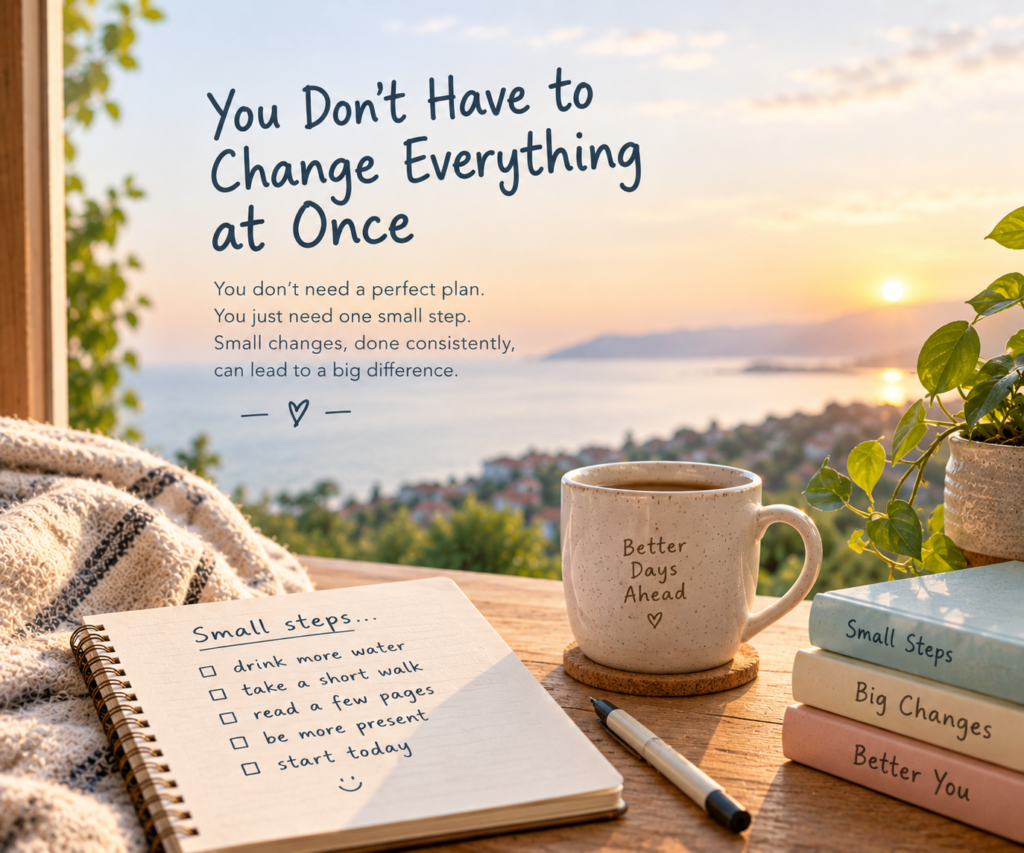
You don’t need to completely overhaul your life by tomorrow morning. You really don’t. You can just start with one tiny step. Drink an extra glass of water, go for a short ten-minute walk, put your phone away for fifteen minutes, or just get to bed ten minutes earlier tonight.
At first, these small actions might feel almost pointless. You might catch yourself thinking, “What difference is this even going to make?” But that is where the real magic happens. Small, repeated actions quietly pile up over time like a snowball rolling down a hill.
Action Creates Motivation
We usually sit around waiting for that massive wave of motivation to hit before we finally decide to start something. We tell ourselves we’ll wait for the right moment, for Monday to roll around, or until things finally calm down.
Except motivation doesn’t always show up first. In fact, action is often what creates motivation in the first place. You take one small step, and suddenly the second step feels a bit easier. Before you know it, the engine is running and the wheels are turning. You don’t need to feel inspired; you just need to get moving.
Make the First Step Ridiculously Easy
If a new habit feels intimidating, your goal is probably too big. Want to read more? Don’t pressure yourself to finish a whole chapter. Just read a single page. Want to exercise? Forget the hour-long gym session and just stretch for five minutes.
The point isn’t to impress anyone. The point is to lower the barrier to entry so your brain doesn’t put up a fight. Once you sit down and actually begin, keeping going becomes much easier.
Real Progress is Quiet
The most lasting changes in life usually arrive without making any noise. You might not notice the shift from one day to the next, but if you look back a few weeks later, something feels different. You’re sleeping a little better, your mind feels clearer, your screen time has dropped, and you trust yourself just a bit more.
Progress doesn’t always have to look impressive from the outside. It just has to nudge you a little closer to where you actually want to be.
Give Yourself Permission to Be a Beginner
If you want to get good at something new, you have to be willing to be bad at it first. It is completely okay to start slowly, make mistakes, change your mind along the way, or even start over. Being a beginner isn’t embarrassing—it’s concrete proof that you are willing to grow.
You don’t have to fix your entire life today. Just pick one thing. One tiny action, one small improvement. Let that be enough for now. Tomorrow, you can take another step. That’s how real paths are built.