Author: can

  • It’s Okay to Slow Down

    Everything around us seems to be moving faster.

    Messages arrive instantly.
    Work follows us home.
    There is always another task, another goal, another notification waiting for our attention.
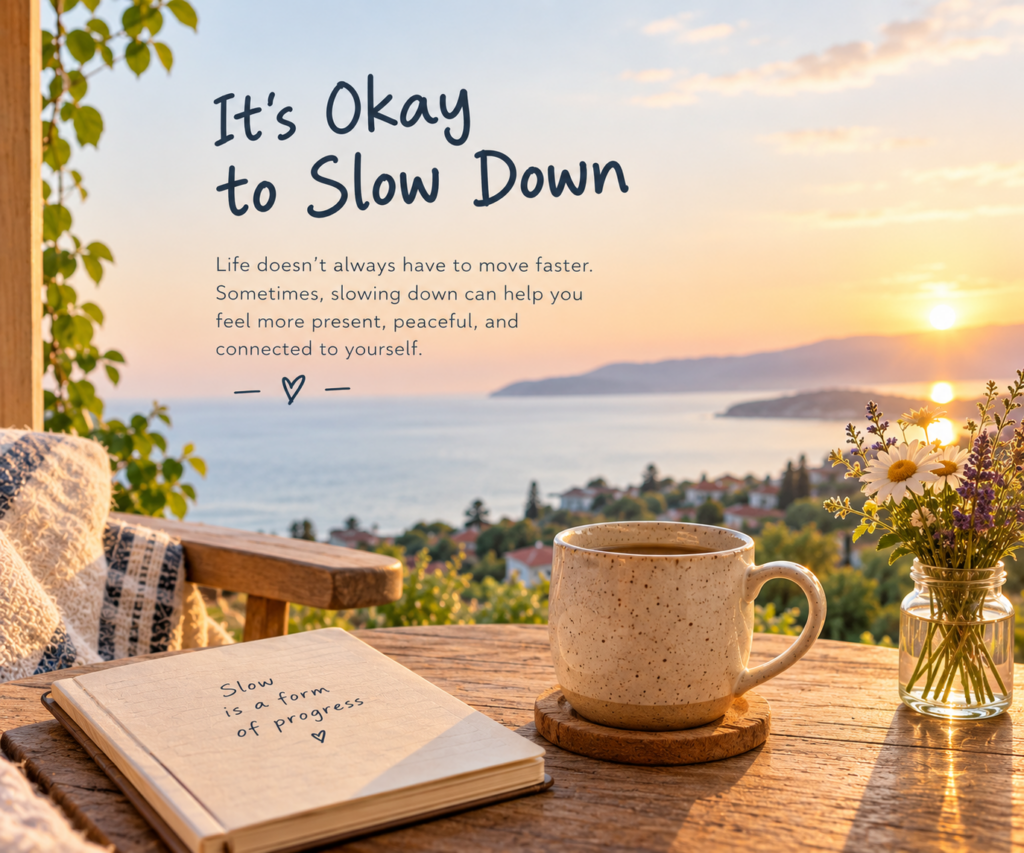
    It’s Okay to Slow Down

    And somewhere along the way, we started believing that moving faster means doing better.

    But it doesn’t.

    Sometimes, it’s okay to slow down.

    You Don’t Have to Rush Through Your Life

    There is no prize for finishing your day exhausted.

    You don’t have to answer every message immediately.

    You don’t have to turn every free hour into something productive.

    You don’t have to constantly improve, achieve, or accomplish something.

    Life isn’t a race where the person who moves fastest wins.

    Sometimes the best thing you can do is take a breath and stop rushing toward the next thing.

    Slow Doesn’t Mean Lazy

    Slowing down can feel uncomfortable when you’ve spent a long time being busy.

    You might wonder:

    “Shouldn’t I be doing something?”

    “Am I wasting time?”

    “Could I be more productive right now?”

    But rest isn’t wasted time.

    A quiet morning isn’t wasted time.

    Taking a walk without checking your phone isn’t wasted time.

    Sitting with your thoughts isn’t wasted time.

    These moments give your mind space to breathe.

    Notice What You Usually Miss

    When everything happens quickly, you start missing the small things.

    The warmth of your morning coffee.

    The sound of rain against the window.

    A conversation that lasts a little longer than expected.

    The feeling of sunlight on your face.

    The song playing in the background while you make dinner.

    These moments don’t look important on a schedule.

    But they are part of your life.

    And life is made mostly of moments like these.

    You Can Do Less and Still Be Enough

    Your value isn’t measured by your productivity.

    You don’t become more worthy because you completed ten tasks instead of five.

    You don’t become less valuable because you needed a quiet afternoon.

    You are allowed to have days when your biggest accomplishment is simply taking care of yourself.

    Some days are for progress.

    Some days are for rest.

    Both belong in a healthy life.

    Try Going a Little Slower Today

    You don’t need to completely change your lifestyle.

    Start with one small thing.

    Drink your coffee without scrolling.

    Take a slower walk.

    Eat one meal without looking at your phone.

    Spend five minutes sitting somewhere quiet.

    Finish one task before immediately starting another.

    Give yourself permission to be where you are instead of constantly thinking about where you need to be next.

    You Are Not Falling Behind

    This might be the most important reminder:

    You are not behind.

    Someone else’s timeline doesn’t determine yours.

    You don’t have to reach every milestone at the same age.

    You don’t have to move at someone else’s speed.

    Your life is allowed to have its own rhythm.

    Maybe today doesn’t need to be faster.

    Maybe it just needs to be yours.

    A Tiny Reminder for Today

    Slow down.

    Take a breath.

    Look around.

    Notice something beautiful.

    Let yourself exist for a moment without trying to achieve anything.

    You don’t have to rush through your life to prove that you’re living it.

    Sometimes, slowing down is how you finally start noticing the life you’ve already built.
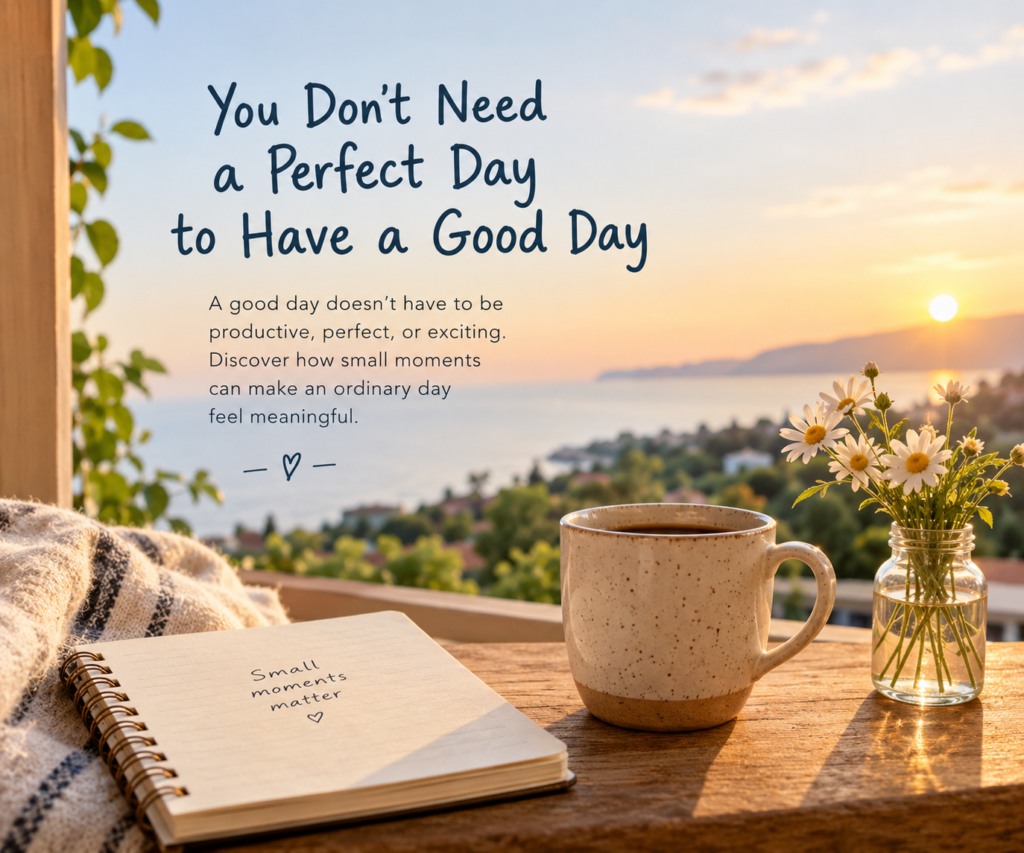
  • You Don’t Need a Perfect Day to Have a Good Day

    We often imagine that a good day has to be special.

    We wake up early. We finish everything on our list. We exercise, eat perfectly, stay productive, answer every message, and somehow find enough energy to enjoy the evening.

    You Don’t Need a Perfect Day to Have a Good Day

    But real life rarely looks like that.

    Some days are messy. Some days are slow. Some days feel completely ordinary.

    And that doesn’t mean they are bad days.

    A Good Day Can Be Very Small

    Maybe you had your coffee while the morning was quiet.

    Maybe you walked outside for ten minutes.

    Maybe you listened to a song you love.

    Maybe you finally replied to a message you had been avoiding.

    Maybe you simply rested without feeling guilty about it.

    These moments may seem insignificant, but they are still part of your life.

    We don’t need to turn every day into a success story.

    Sometimes, we just need to notice that something good happened.

    Stop Measuring Your Day Only by Productivity

    One of the easiest ways to make yourself feel like you had a bad day is to measure everything by what you accomplished.

    How many tasks did you complete?

    How much work did you do?

    How productive were you?

    But productivity is only one part of life.

    Rest is valuable.

    Connection is valuable.

    Curiosity is valuable.

    Being present is valuable.

    Even doing nothing for a while can be valuable.

    Your worth isn’t determined by how much you managed to get done today.

    Look for One Good Moment

    Instead of asking yourself:

    “Did I have a good day?”

    Try asking:

    “What was one good moment today?”

    It could be something incredibly simple.

    The sunlight coming through the window.

    A funny conversation.

    A good meal.

    A peaceful walk.

    A few minutes without your phone.

    Finding something you thought you had lost.

    One good moment is enough to change the way you remember an ordinary day.

    You Don’t Have to Fix Everything Today

    There will always be something unfinished.

    Another email.

    Another responsibility.

    Another goal.

    Another problem waiting for your attention.

    You don’t have to solve everything before you allow yourself to feel okay.

    Sometimes the healthiest thing you can do is say:

    “That’s enough for today.”

    And mean it.

    Tomorrow will have its own opportunities.

    Make Room for Ordinary Happiness

    We spend so much time waiting for big moments.

    The new job.

    The vacation.

    The relationship.

    The achievement.

    The perfect morning.

    But life is mostly made of ordinary days.

    If we only allow ourselves to be happy when something extraordinary happens, we miss most of our own lives.

    Look closer.

    There is probably something good happening right now.

    Maybe it’s tiny.

    That’s okay.

    Tiny things count.

    A Tiny Reminder for Today

    You don’t need to have the perfect day.

    You don’t need to accomplish everything.

    You don’t need to feel motivated all the time.

    Just find one small moment that feels good.

    Notice it.

    Enjoy it.

    Let it be enough.

    A good day doesn’t have to be perfect. It just has to contain one moment worth noticing.

  • 🌿 The Courage to Begin

    Every journey starts with a single step. Learn why taking action—even when afraid or unprepared—is the key to progress and personal growth.


    #courage #growth #mindset #motivation #dailyinspiration


    Starting Is the Hardest Part

    Often, the hardest step in any journey is the first one.
    We wait for the perfect moment, the right plan, or the ideal conditions—but the truth is: there is no perfect moment.

    Taking the first step requires courage—the courage to start before you feel ready.


    Why Beginning Matters

    • 💪 Breaks inertia: Action sparks momentum, no matter how small.
    • 🌱 Builds confidence: Each start proves you’re capable of moving forward.
    • Clarifies direction: Once you begin, you learn and adjust along the way.
    • ❤️ Creates opportunity: New experiences and growth emerge only through action.

    Waiting for certainty often keeps us stuck in place. Courage allows us to bridge the gap between intention and action.


    Examples of Courageous Beginnings

    • Sending that first email to pitch your idea.
    • Writing the first sentence of a book, even if it feels messy.
    • Starting a workout or diet plan without waiting for motivation.
    • Launching a project, knowing mistakes are possible.
    • Approaching someone to mend a relationship, even when nervous.

    Every brave first step opens doors and possibilities that weren’t there before.


    How to Cultivate the Courage to Begin

    Start small: Tiny, manageable actions reduce fear and overwhelm.
    Focus on the process, not perfection: Progress matters more than flawless execution.
    Reframe fear: See anxiety as a sign that you’re growing.
    Commit to action today: Don’t wait for inspiration—take a step now.
    Reflect and adjust: Learn as you go, rather than waiting to have all the answers.


    Momentum Follows Action

    Courage is contagious—starting creates momentum:

    1. Take the first step → 2. Build small wins → 3. Gain confidence → 4. Continue progressing

    Every journey, no matter how ambitious, begins with one brave action.


    Final Thought

    🌱 “The journey of a thousand miles begins with a single step.” — Lao Tzu

    Stop waiting. Stop overthinking.
    Take that first step, even if it feels uncomfortable, uncertain, or imperfect.

    Because the courage to begin is the doorway to growth, progress, and transformation.

  • 🌿 The Power of Small Beginnings

    Big changes start with small steps. To transform your habits and create a sustainable life, all you need to do is begin.


    #habits #personaldevelopment #sustainability #motivation #mindset


    Small Starts, Big Impact

    When you set a goal, the first thing that usually comes to mind is a big, bold vision:
    📝 Writing a book
    🏃‍♂️ Running a marathon
    💼 Starting your own business
    🧠 Living with more discipline

    But here’s the truth:
    No big goal happens without a small beginning.

    We often think starting is the hardest part.
    But really, the hardest part is putting off the start.


    You Don’t Need to Be “Ready”

    Most people delay taking action because they don’t feel ready.
    But the truth is: Readiness often comes after you begin.

    Instead of waiting, ask yourself:

    What’s the smallest step I can take toward this today?

    Sometimes, you just need to crack the door open.
    The rest unfolds from there.


    Why Small Steps Work

    • They convince your brain: A tiny win tells your brain, “I can do this.” That builds confidence.
    • They lower resistance: Big leaps can feel overwhelming. Small steps feel doable.
    • They promote consistency: When it’s easy to do, you’re more likely to stick with it.

    You don’t need to feel big to do big things.
    Even small energy can lead to major growth.


    Examples of Small Starts

    📚 Reading just 5 pages a day
    🧘‍♂️ Doing 1 minute of breathwork
    📓 Writing one sentence in your journal each morning
    🚶‍♀️ Taking a short walk
    📵 Turning off screens for just 10 minutes

    These might seem like nothing.
    But together, they create real change.


    Growth Requires Patience

    Small starts take patience.
    When results aren’t immediate, you might wonder, “Is this enough?”

    But remember:

    The bamboo tree grows underground for 5 years before it shoots up.
    On year five, it suddenly grows feet in just weeks.

    You’re building roots—even when you can’t see them yet.
    Trust the process. Keep showing up.


    Let Direction Matter More Than Speed

    Goals can sometimes feel heavy.
    But if you’ve chosen the right direction, even slow progress still counts.

    🎯 Moving just 1% each day adds up fast.
    🎯 A tiny shift now can lead to massive change six months from today.

    Never underestimate small steps.
    They are the seed of your transformation.


    Final Thought

    🌱 “A journey of a thousand miles begins with a single step.” — Lao Tzu

    Don’t overthink the first move.
    Don’t wait for the perfect moment.
    Don’t rely on motivation alone.

    Just begin.
    With one minute, one word, one breath.

    Move a little each day.
    And over time, you’ll realize:

    The day you started small was the day everything began to change.

  • 🌿 Smile at Yourself Today

    A simple smile can boost your mood, confidence, and perspective. Learn why smiling at yourself is a small act with a big impact.


    #selflove #positivity #mindset #dailyinspiration #happiness


    The Power of a Smile

    We often underestimate the impact of a simple smile—especially a smile directed at ourselves.
    Smiling at yourself isn’t vanity; it’s a gentle reminder that you are worthy of kindness, joy, and self-compassion.

    Even a small gesture like smiling can shift your mood, reduce stress, and boost confidence.


    Why Smiling at Yourself Matters

    • 🌱 Improves mood: The act of smiling releases endorphins and serotonin, lifting your spirits.
    • 💪 Builds confidence: Acknowledging yourself with positivity reinforces self-worth.
    • Reduces stress: Smiling triggers a relaxation response in the nervous system.
    • ❤️ Encourages self-compassion: Reminds you to be gentle with yourself during tough moments.

    A small smile is a tiny act of self-care that has lasting effects.


    Simple Ways to Smile at Yourself

    • Morning mirror check-in: Smile at your reflection and say one kind word to yourself.
    • Gratitude moment: Smile while thinking of something you appreciate about yourself.
    • Celebrate small wins: Even a minor accomplishment deserves a smile.
    • Posture reset: Stand tall, lift your chin, and let a natural smile form.
    • Breathing with joy: Inhale deeply, exhale slowly, and smile while doing so.

    These small acts train your brain to notice positivity, even in challenging moments.


    Make It a Daily Habit

    Anchor it to routines: Smile when brushing your teeth, making coffee, or getting dressed.
    Start with intention: Even a forced smile can trigger real positive effects over time.
    Pair with affirmations: Say “I am enough” or “I’ve got this” as you smile.
    Notice the impact: Reflect on how your mood shifts after this tiny ritual.


    The Ripple Effect

    Smiling at yourself doesn’t just affect you:

    • Your energy becomes more positive, affecting interactions with others.
    • You cultivate self-love and kindness, reinforcing resilience.
    • You train your brain to focus on good moments instead of dwelling on negative ones.

    Small gestures compound, and a daily smile can be a cornerstone habit for happiness.


    Final Thought

    🌱 “Use your smile to change the world; don’t let the world change your smile.” — Unknown

    Take a moment today to smile at yourself.
    Celebrate your progress, your efforts, and your presence.

    Because even a simple smile can brighten your day, shift your mindset, and remind you of your worth.

  • 🌿 A Little Progress Is Still Progress

    Every small step counts. Learn why consistent, incremental progress matters more than perfection and how tiny wins build lasting success.


    #progress #habits #mindset #growth #dailyinspiration


    Small Steps Matter

    We often underestimate the impact of small actions.
    It’s easy to feel discouraged when change is slow, or results aren’t immediate.
    But even tiny progress adds up—and over time, it becomes transformative.

    Progress isn’t about perfection or speed; it’s about showing up consistently, no matter how small the steps.


    Why Little Progress Is Powerful

    • 🌱 Builds momentum: Each small action propels you forward.
    • 💪 Strengthens confidence: Completing even minor tasks proves your capability.
    • Reduces overwhelm: Focusing on manageable steps keeps goals achievable.
    • ❤️ Encourages consistency: Small wins reinforce habit formation.

    Every journey starts with one step, and every step matters.


    Examples of Small Progress

    • Writing 50 words instead of waiting for a full chapter.
    • Doing 5 minutes of exercise instead of skipping entirely.
    • Saving a small amount of money consistently each week.
    • Spending 10 minutes on learning a new skill daily.
    • Tidying one corner of a room rather than the whole space.

    These micro-actions may seem minor, but repeated consistently, they compound into meaningful results.


    How to Embrace Small Progress

    Celebrate every step: Acknowledge achievements, no matter how small.
    Focus on consistency: Daily actions outweigh occasional bursts of effort.
    Break goals into micro-steps: Make tasks manageable and less intimidating.
    Track wins: Journaling or checking progress reinforces momentum.
    Trust the process: Growth takes time, and small steps are the foundation.


    The Ripple Effect

    Small progress builds:

    • Habits that become automatic over time.
    • Confidence that fuels bigger efforts.
    • Momentum that carries you through challenges.
    • Clarity about what works and what needs adjustment.

    Even tiny actions, when compounded, lead to remarkable transformation.


    Final Thought

    🌱 “Success is the sum of small efforts, repeated day in and day out.” — Robert Collier

    Don’t wait for perfection.
    Don’t discount tiny wins.

    Because a little progress, repeated consistently, is still progress—and it’s how real, lasting change happens.

  • 🌿 Choose Your Mood

    Your mood shapes your day. Learn how to take control of your emotions, respond intentionally, and cultivate positivity for a better life.


    #mindset #emotions #positivity #dailyinspiration #selfcare


    Your Mood Shapes Everything

    We often feel at the mercy of our emotions, letting stress, frustration, or fatigue dictate our day.
    But the truth is: you have the power to choose your mood.

    While we can’t control every circumstance, we can control how we respond and what mindset we bring to each moment.


    Why Choosing Your Mood Matters

    • 🌱 Influences productivity: Positive and focused moods increase efficiency and creativity.
    • Affects relationships: How you feel impacts how you interact with others.
    • 💪 Builds resilience: Choosing calm over panic helps navigate challenges.
    • ❤️ Supports well-being: Intentional emotional choices reduce stress and increase happiness.

    Your mood is a tool—it can either work for you or against you.


    Simple Ways to Choose Your Mood

    • Pause and breathe: Take a few deep breaths before reacting to stress or frustration.
    • Reframe the situation: Ask, “What can I learn from this?” or “What’s good here?”
    • Move your body: Even a short walk or stretch releases tension and lifts spirits.
    • Engage in gratitude: Name three things you appreciate right now.
    • Consume mindfully: Choose uplifting content and avoid negativity when possible.

    These small habits shift your emotional baseline and give you more control over your day.


    Daily Practice

    • Morning check-in: Set your intention for the mood you want to carry today.
    • Midday reset: Pause for a breath or walk if you feel stressed or distracted.
    • Evening reflection: Notice what influenced your mood and what you can adjust tomorrow.

    Consistency in these practices helps you train your emotional responses over time.


    The Ripple Effect

    When you actively choose your mood:

    • Your focus improves, and tasks feel more manageable.
    • Interactions with others become more positive and productive.
    • Your resilience strengthens, helping you recover faster from setbacks.
    • Daily life becomes calmer, more intentional, and joyful.

    Final Thought

    🌱 “Happiness is not something ready-made. It comes from your own actions.” — Dalai Lama

    Stop letting your emotions control your day.
    Take charge, cultivate positivity, and choose your mood intentionally.

    Because when you choose your mood, you choose your experience, your energy, and your life.

  • 🌿 One Minute Can Change Your Day

    Small, intentional actions—even just one minute—can reset your mindset, boost focus, and transform your day. Learn simple ways to harness this power.


    #mindset #focus #dailyinspiration #habits #selfcare


    The Power of One Minute

    Sometimes, we feel like meaningful change requires hours of effort, big plans, or massive energy.
    But one minute is all it takes to shift your mindset, reset your emotions, and influence the trajectory of your day.

    A single minute, used intentionally, can ripple outward, creating calm, clarity, and momentum.


    Why One Minute Matters

    • Interrupts negative cycles: Pause before reacting to stress, frustration, or overwhelm.
    • 🌱 Builds small habits: One minute of meditation, journaling, or reading can start a lasting routine.
    • 💪 Restores focus: A brief pause refreshes your mind and prevents burnout.
    • ❤️ Improves mood: Even a minute of gratitude or deep breathing can shift your emotional state.

    Small actions compound over time, and consistency matters more than duration.


    One-Minute Practices to Transform Your Day

    • Deep breathing: Inhale slowly for four counts, hold, exhale for four counts. Repeat once or twice.
    • Gratitude pause: Name three things you appreciate right now.
    • Stretch or move: Stand up, stretch your body, or take a quick walk.
    • Mindful observation: Notice your surroundings—sounds, colors, textures—without judgment.
    • Positive affirmation: Repeat one empowering sentence like, “I am capable and present.”

    Even brief, these actions reset your nervous system and center your mind.


    How to Make It a Habit

    Anchor to daily routines: Tie one-minute practices to brushing teeth, morning coffee, or lunch breaks.
    Be intentional: Treat this minute as sacred, not rushed or multitasked.
    Track consistency: Check a box or mark a calendar to reinforce repetition.
    Start anywhere: Morning, afternoon, or evening—any moment can reset your day.


    The Ripple Effect

    One minute creates momentum:

    • Your focus improves for the next task.
    • Your mood shifts toward positivity.
    • You gain clarity for decision-making.
    • Small minutes accumulate into a powerful, intentional day.

    Final Thought

    🌱 “Time is what we want most, but what we use worst. Use even a minute wisely, and it changes everything.”

    Don’t underestimate the power of one minute.
    Pause, breathe, reflect, or stretch—and watch how this tiny investment transforms your day.

    Because one minute of intention can lead to hours of clarity, energy, and progress.

  • 🌿 Say No to Say Yes

    Learning to say no protects your time, energy, and priorities, allowing you to say yes to what truly matters. Discover the power of intentional refusal.


    #boundaries #mindset #selfcare #focus #dailyinspiration


    The Power of No

    We often feel obligated to say yes—whether it’s to social events, extra work, or favors for others.
    But every yes comes with a cost: your time, energy, and focus.

    Learning to say no isn’t about being selfish—it’s about creating space to say yes to what truly matters.


    Why Saying No Matters

    • Protects your energy: Prevents burnout and mental fatigue.
    • 🌱 Supports priorities: Ensures your time aligns with your goals and values.
    • 💪 Builds respect: Both self-respect and the respect of others grow when boundaries are clear.
    • ❤️ Increases freedom: Saying no empowers you to make intentional choices.

    Each no is an opportunity to preserve resources for meaningful yeses.


    Examples of Saying No

    • Declining a social invitation to focus on rest or personal growth.
    • Refusing extra tasks at work that don’t align with your goals.
    • Saying no to distractions like endless scrolling or unnecessary meetings.
    • Turning down commitments that drain energy without adding value.
    • Politely refusing requests that conflict with your priorities.

    Saying no is not rejection—it’s intentional self-care and clarity.


    How to Say No Effectively

    Be clear and direct: A simple, polite no is often enough.
    Offer alternatives when appropriate: You can redirect without overcommitting.
    Prioritize your commitments: Know what matters most before deciding.
    Practice regularly: Saying no becomes easier with repetition.
    Respect yourself: Understand that your time and energy are valuable.


    The Ripple Effect

    When you say no intentionally:

    • You gain space for growth, creativity, and focus.
    • Your yeses become more meaningful and impactful.
    • Stress decreases as overcommitment fades.
    • You model healthy boundaries for others to respect.

    Final Thought

    🌱 “Half of the troubles of this life can be traced to saying yes too quickly and not saying no soon enough.” — Josh Billings

    Learn to say no without guilt.
    Protect your energy, focus, and priorities.

    Because saying no today allows you to say yes to the things that truly matter tomorrow.

  • 🌿 Turn Off, Tune In

    In a world full of distractions, turning off devices and tuning into yourself can restore focus, clarity, and inner peace. Learn how to reclaim your attention.


    #mindfulness #focus #selfcare #dailyinspiration #clarity


    The Modern Dilemma: Always “On”

    We live in a world of constant notifications, emails, and digital noise.
    It’s easy to feel pulled in a hundred directions, losing focus on what truly matters.

    Yet the solution isn’t more productivity hacks—it’s simpler: turn off, tune in.


    What “Turn Off, Tune In” Means

    • Turn off distractions: Silence notifications, put your phone aside, and step away from screens.
    • Tune in to yourself: Listen to your thoughts, emotions, and physical sensations.
    • Reconnect with the present moment: Focus on your surroundings, your breath, and the task at hand.

    It’s not about avoiding the world—it’s about choosing when and how to engage.


    Why It Matters

    • 🧠 Improves focus: Without constant digital interruptions, your mind can concentrate deeply.
    • 🌱 Supports emotional health: Quiet moments help process thoughts and feelings.
    • Boosts creativity: Stepping back from screens allows ideas to surface naturally.
    • ❤️ Enhances relationships: Being fully present improves connection with others.

    Even short breaks from technology can create profound clarity and calm.


    Simple Ways to Practice

    • Set device-free windows: Morning coffee, meals, or a 15-minute break.
    • Meditate or breathe deeply: Even five minutes restores energy and awareness.
    • Go for a walk: Leave your phone behind and notice the world around you.
    • Journal your thoughts: Tune in to what’s happening internally without distraction.
    • Limit social media: Choose specific times to check, instead of constant scrolling.

    These small habits train your attention and strengthen your capacity to focus.


    The Ripple Effect

    Turning off and tuning in doesn’t just affect your moments of practice:

    • You approach work with more clarity and efficiency.
    • You engage in relationships with full presence and empathy.
    • You notice opportunities, ideas, and insights that usually get lost in distraction.
    • You regain a sense of control over your time and attention.

    Final Thought

    🌱 “Almost everything will work again if you unplug it for a few minutes… including you.” — Anne Lamott

    Step away from the noise.
    Turn off your devices, tune into yourself, and rediscover the power of presence.

    Because when you disconnect from distractions, you reconnect with your focus, your creativity, and your life.

✨ Loading...
Get Motivation →